
My Ham Radio Adventures & Ham Radio in the Digital Age
- jrock80
- Jul 18
- 3 min read
Updated: Aug 9
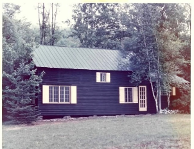
I first became interested in amateur ham radio when I was a kid spending summers at my parents' place at the end of a dirt road in Vermont in a small village with a church and a small general store that sold everything from gasoline to icy cold Nehi grape soda floating in an old fashioned Pepsi cooler. It was more of an oversized cabin with a large woodburning stove in the kitchen and fireplace for heat on chilly Vermont summer mornings. There was a pump in the kitchen for water and an outhouse for taking care of business. My mother quickly grew tired of having no running water, bathroom, and a shower. My father added a bathroom and running cold/hot water the following summer. It was a welcome addition even for a six-year-old since taking care of business at 3am in the dark with a lantern for light had its challenges not to mention being cold.
The only other house within a half mile was a retired gentleman and his wife across a wide meadow filled with Goldenrod, wildflowers, and a long stone wall, which was most likely over 100-years-old. The retired gentleman (Mr. Temple) worked for Reminton Arms as a mechanical engineer in Connecticut for many years. His hobbies included target practice; he taught me strict gun safety at a young age, working on his old Buick and Cadilac, and ham radio. He had an old Hallicrafters rig for CW (Morse Code) and voice communications on high frequencies (HF). Hallicrafters was the BMW of ham radios back in the 1960s. I remember it being a massive set with lots of dials, knobs, glowing tubes, and mysterious sounds when he was working CW. To a 7- or 8-year-old boy, it was fascinating to watch and learn.
I spent much of my free time helping Mr. Temple working on his cars, cleaning his riffle collection and helping him load one of his .22 caliber or 30-30 riffles at the target range next to his house. In addition, listening to him work (QSO) with distant ham radio stations on his ham radio.
Fast forward many years; I finally decided it was time to get my amateur ham radio license. Today, I am involved with my local RACES (Radio Amateur Civil Emergency Service) chapter in my hometown and am a SKYWARN spotter for the NWS. In addition to analog modes of communications, I am exploring digital modes (DMR), which uses the Internet (IoT) to connect to talk groups all over world. In addition, Foxhunting. “Foxhunting is an outdoor game where participants use antennas and receivers to track down a hidden, low-power radio transmitter (the "fox"). It blends technology, puzzle-solving, and hiking or driving, and trains operators for real-world emergency search-and-rescue operations.”
I was also a big CB'er back in the early 70s through the mid-80s. My call sign was KGO-0056 and my handle was Little Big Man from the movie staring Dustin Hoffman, Chief Dan George, Faye Dunaway, Martin Balsam, Jeff Corey and Richard Mulligan. My first base station was a Lafayette Comstat 23 tube radio with a Turner Plus III mic. I have a lot of great memories of the early CB days and have friends from back then who moved on to ham radio.
Ham radio is a wonderful hobby, and I hope younger generations (my stepdaughter) will discover it. There are countless ways to connect with people across town, across the country, and around the world. Modern technology, including digital modes and the Internet of Things (IoT), has opened exciting new chapters in amateur radio.
One of the best things about the hobby is that you do not need expensive equipment to get started. What matters most is a willingness to learn, experiment, and get involved. Some operators enjoy using Morse Code (CW), communicating much the way our parents and grandparents did decades ago. Many younger operators have also embraced CW because it can often reach stations farther than voice communications under challenging conditions.
Whether your interests are emergency communications, public service, digital modes, satellites, contesting, experimentation, or simply making new friends around the world, amateur radio offers something for everyone.
I may be a new ham operator, but in many ways my journey began many decades ago watching a neighbor's glowing tube radio come to life in a small Vermont house at the end of a remote dirt road.


Comments